
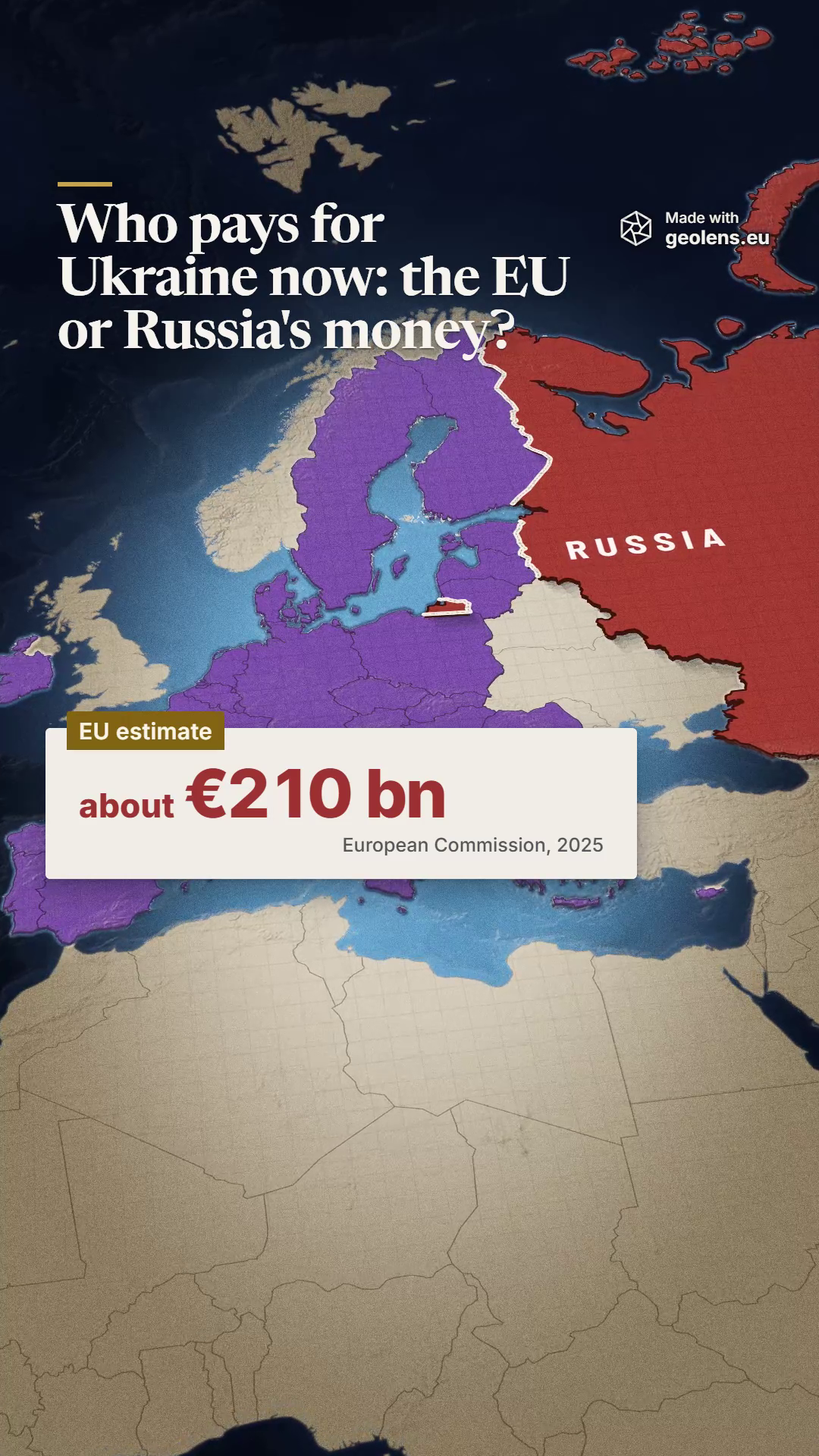
Who pays for Ukraine now: the EU or Russia's money?
Frozen, not confiscated: what the EU does with the interest
For now, the EU borrows. About €210 bn of the Bank of Russia's assets, by EU estimate, stay frozen in the EU and only the interest on the cash is used, €8 bn so far, while the EU borrows €90 bn for 2026 and 2027 and the Commission proposes up to €45 bn more for 2027.
GeoLens team · 19 Nov 2026 · data to 2026
- about €210 bnof the Bank of Russia's assets frozen in the EU, EU estimate of Dec 2025
- €8 bnpaid out from the interest since July 2024, in five payments
- up to €45 bnmore for 2027, proposed by the Commission on 18 Nov 2026, EU borrowing
 Watch the film 1:05
What is frozen
About €210 bn of the Bank of Russia's assets are frozen in the EU, the European Commission's estimate of December 2025. The Commission says that is most of such assets in the world.
Since 28 February 2022 the EU has banned transactions with them.
EU law says the ban is temporary. It ends only when Russia ends its war against Ukraine, pays reparations to Ukraine (payment for the war damage), and is no longer a serious risk to the EU's economy.
The numbers
| What happened | Date | Source |
|---|---|---|
| The EU bans transactions with the Bank of Russia's reserves | 28 Feb 2022 | Council of the EU, 2022 |
| Depositories must set the profits aside and may not use them or pay them to shareholders | 15 Feb 2024 | European Commission, 2025 |
| The Commission estimates about €210 bn frozen in the EU | 3 Dec 2025 | European Commission, 2025 |
| A new law bans, on a temporary basis, any transfer back to Russia | 12 Dec 2025 | Council of the EU, 2025 |
Source, unless a row names its own: European Commission, 2025
Why Belgium
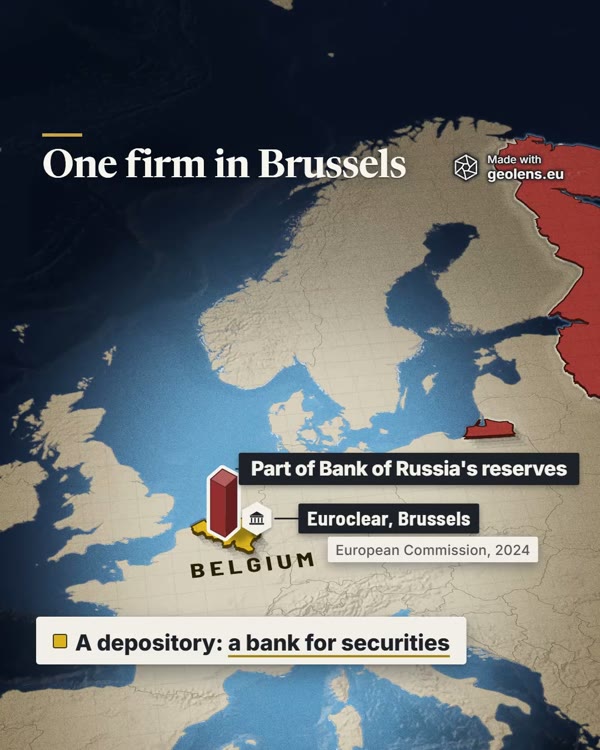
The EU's rule on this money covers each central securities depository that holds the Bank of Russia's assets and reserves above a minimum value. A depository keeps securities for banks and pays out what they earn.
In July 2024 the European Commission said only one depository fell under the rule: Euroclear, in Belgium.
The rule covers depositories only. Other financial institutions in the EU may hold other parts of the €210 bn.
That figure is the Commission's estimate for the whole EU, so we show no figure for Belgium alone.
The numbers
| The EU rule | Value | Source |
|---|---|---|
| Depositories under the rule in 2024 | Euroclear, in Belgium | European Commission, 2024 |
The interest, not the assets
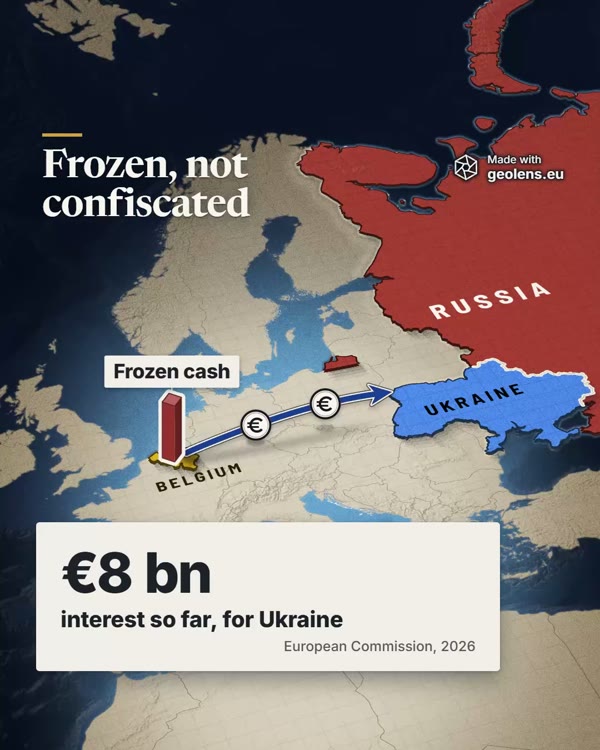
As the securities matured, the cash piled up. Cash earns interest, and since 15 February 2024 the depositories must set the profits aside and may not use them.
Five payments from these extra profits (windfall profits) have reached the EU, €8 bn in all: 1.5 + 2.1 + 1.6 + 1.4 + 1.4 = 8.0, the Commission's own total. Each payment goes to support Ukraine.
Is this theft? EU law says the freeze does not change who owns the assets: the Bank of Russia still owns them.
The cash balances that built up are not sovereign assets, and the EU says the interest on them does not belong to Russia, so it does not have to be handed back, even after the freeze ends.
The numbers, € bn
| Payment | Amount | Source |
|---|---|---|
| Jul 2024 | 1.5 | European Commission, 2024 |
| Apr 2025, requested | 2.1 | European Commission, 2025 |
| Aug 2025 | 1.6 | European Commission, 2025 |
| Mar 2026 | 1.4 | European Commission, 2026 |
| Aug 2026 | 1.4 | European Commission, 2026 |
| Total | 8.0 | European Commission, 2026 |
Source, unless a row names its own: European Commission, 2026
The loan plan, and the borrowing
In December 2025 the Commission proposed a Reparations Loan of up to €210 bn, paid for by the frozen cash, which Ukraine would repay only once it receives reparations from Russia. It was a proposal, not adopted law.
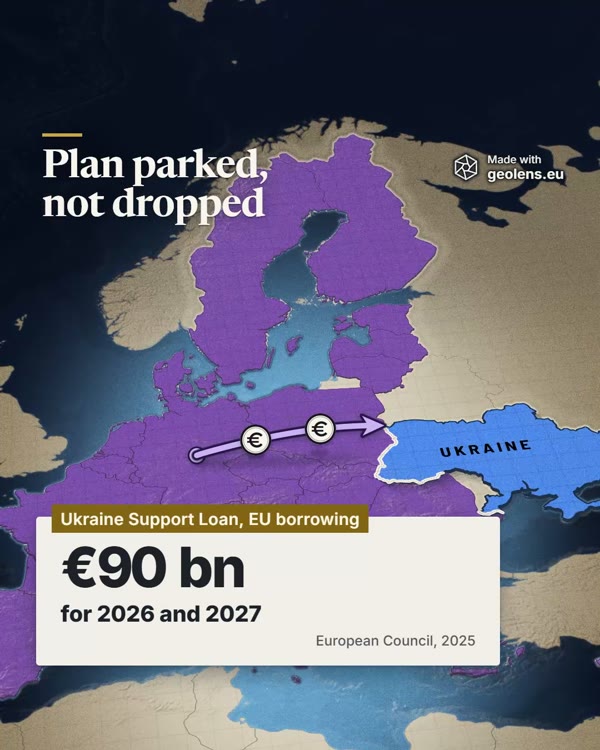
At the summit of 18 December 2025 the EU chose to borrow instead: a €90 bn loan for 2026 and 2027, backed by the EU budget. The leaders also asked for work on the Reparations Loan to continue, so the plan is on hold, not dropped.
Using the EU budget as a guarantee for the loan does not affect the financial obligations of Czechia, Hungary and Slovakia.
Ukraine repays when Russia pays reparations, and also on other triggers set out in the regulation, such as corruption or other illegal activity harming the EU's financial interests. The EU keeps the right to use the frozen assets to repay the loan.
On 18 November 2026 the European Commission proposed "up to €45 billion in additional financial support to Ukraine in 2027". It would be EU borrowing, and Ukraine would repay it only once it receives reparations from Russia.
It is a proposal, not adopted law, and it comes on top of the €90 bn, not as part of it.
The numbers, € bn
| Loan | Amount | Source |
|---|---|---|
| Reparations Loan from the frozen cash, proposed Dec 2025, not adopted | up to 210 | European Commission, 2025 |
| Ukraine Support Loan, EU borrowing, agreed Dec 2025 for 2026 and 2027 | 90 | European Council, 2025 |
| Commission proposal of 18 Nov 2026, more for 2027, EU borrowing, not adopted | up to 45 | European Commission, 2026 |